Pine Roots, Shade, and Crawlspace Moisture Under a Mobile Home
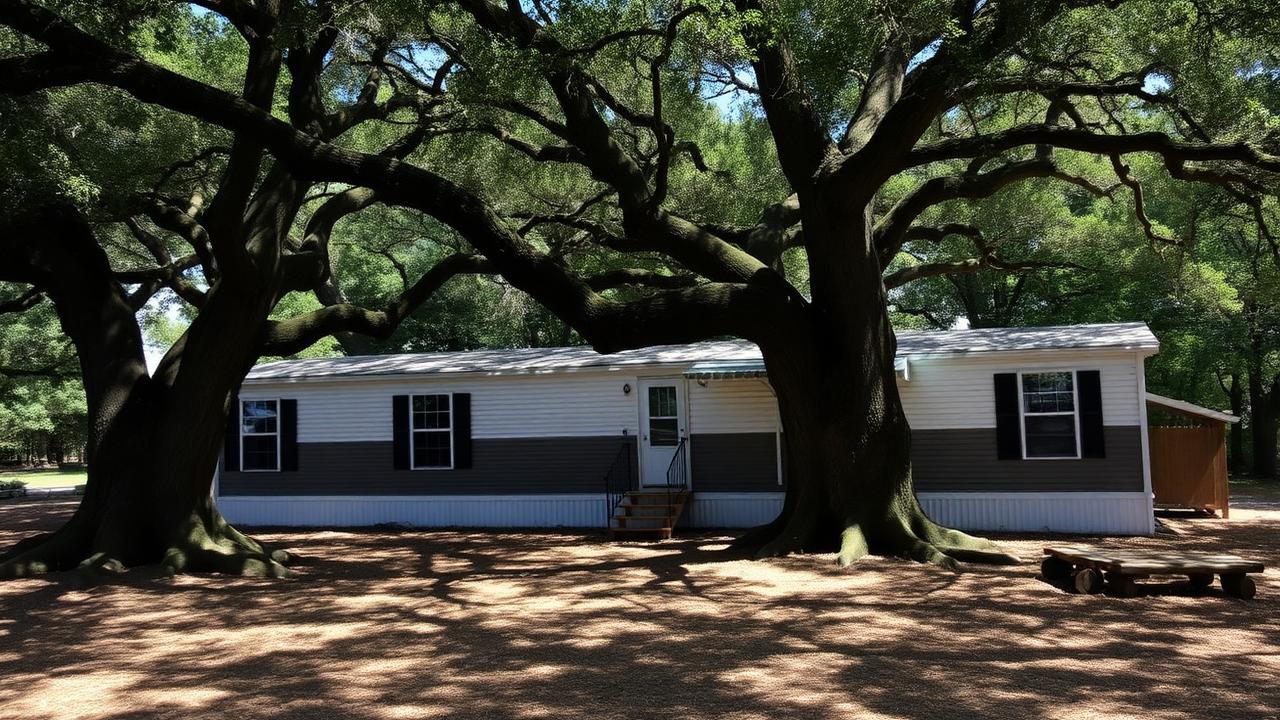
The short answer: large trees change the moisture of the soil under and around a manufactured home, and they change it unevenly. Root systems pull water from the ground in some spots and not others, canopy shade keeps covered ground damp long after open ground dries, and both effects vary across the footprint of a single home. Uneven soil moisture means uneven support, and uneven support is what settles a manufactured home out of level.
On the heavily wooded lots common around Nacogdoches, trees are not scenery. They are part of the home's foundation environment.
How tree cover changes the ground under a home
An open lot and a wooded lot handle the same rain very differently. On open ground, sun and wind dry the surface within hours of a storm. Under a dense canopy, the ground may stay damp for days, and the soil a few inches down can stay wet far longer. Since a manufactured home's piers bear on that upper soil, the drying pattern is not an aesthetic detail. It is a support condition.
Add the local soil profile, sandy loam over dense clay, and the effect compounds. Rain that soaks in fast perches on the clay, and shade slows its evaporation, so wooded portions of a lot hold perched water longer than cleared portions.
What large root systems do to soil moisture
A mature tree is a pump. During the growing season it draws large volumes of water out of the soil and releases it through its leaves, and its roots can extend well beyond the drip line of its branches. When that root zone reaches under or beside a home, the tree dries the soil in its zone while soil outside the zone stays wetter.
Pines
Loblolly and other pines dominate the East Texas woods. Pines tend to root relatively shallow and wide, spreading a broad moisture draw across the upper soil, the same layer where pier footings sit. A home with a mature pine near one corner has measurably different soil moisture at that corner than at the far end, especially heading into a dry spell when the tree pulls hardest.
Hardwoods
Oaks, sweetgums, and other hardwoods root deeper and drink hard in summer. During drought stretches, a large hardwood can dry and shrink the clay subsoil in its root zone, opening a different settling mechanism: not softened soil, but shrunken soil. Either way, the result under the home is the same: support changes in one zone while other zones hold.
Why shade matters as much as roots
Even where roots never reach, canopy changes the under-home environment. Persistent shade keeps the crawl space cool and damp, which slows how fast the ground under the home recovers after rain. That persistent dampness works on everything in the crawl space: wood shims compress and decay faster, steel supports and anchor hardware corrode faster, and the soil itself stays softer longer.
This is why two identical homes on the same street can age differently. The one in the open sheds water and dries. The one under cover holds moisture, and its support system lives in that moisture.
Warning signs on wooded lots
On a treed lot, watch for the settling symptoms first: doors that stop latching, windows that bind, floors that develop a slope, and cracks where walls meet ceilings. Then look for the tree-specific patterns: settling concentrated on the side nearest large trees, skirting buckling on the shaded side first, standing water that lingers under the canopy side after storms, and moss or algae on skirting or the ground, a reliable marker of persistent damp.
Also watch the trees themselves after saturated stretches. Soil softened by perched water holds roots poorly, and a big pine leaning toward a home after days of rain is a safety issue, not a landscaping note.
Managing trees without clear cutting
Nobody moves to the piney woods to live on a bare lot, and tree removal is not the default answer. Practical management looks like this: keep the area immediately around the skirting line clear and graded so water moves away from the home, keep gutters working, thin overcrowded trees rather than clear cutting, and have an arborist look at any large tree close enough to strike the home, especially after wet periods.
For the home itself, periodic level checks matter more on wooded lots, because the moisture drivers never stop working. A support inspection tells you how the piers, shims, and anchors are holding up in the damp environment, and releveling corrects drift before it racks door frames and opens cracks.
Gutters, litter, and drainage under canopy
Trees do not only work below ground. Pine needles and hardwood leaves drop constantly, and on a wooded lot they land on the home's roof and in its gutters. Clogged gutters stop moving water away from the home and instead dump it in sheets at the skirting line, exactly where you least want it, feeding the perched water problem under the piers.
Needle and leaf litter also builds up against skirting and blocks the low spots where water would otherwise escape. On a canopied lot, gutter cleaning and raking litter away from the skirting line are foundation maintenance, not yard cosmetics. A home under heavy cover may need its gutters cleared several times a year to keep roof water from undermining the support system below.
When to schedule an inspection
Schedule a look when symptoms cluster on the wooded side of the home, after any storm that brought both high wind and soaking rain, when you notice a tree leaning or a root plate lifting near the home, or any time skirting, doors, and floors are all telling the same story. This site connects homeowners with independent local contractors who inspect and correct support problems on wooded lots across the Nacogdoches area.